Running
I’ve always been a big proponent of not trying to alter your running stride. The way you run naturally should be the way you’re least likely to get hurt. I can’t tell you how many stories I’ve heard of people trying to change their stride and ending up injured.

And then Super Doc watched me run…
He told me my stride was too long (and I run lopsided, but that’s a different story). Too long? I thought a long stride was a good thing!
It all depends on what kind of running your doing- any kind of distance or fitness running is going to require a shorter stride. Hmm.
I was a sprint to mid-distance runner in high school. You won prizes if you had a long stride. Apparently you also get injured if you keep that up.
The doc told me to shorten up my stride and I’d feel better. (ha.) I was skeptical, but then I re-read one of my race recaps writing my last post. Well what would you know- my knee hurt way back then. (??) I shortened my stride and it felt better. Who knew?
So I’ve been practicing a shorter stride, and paying attention to running form. While the stride itself isn’t what caused my injury, it could help prevent it from acting up. [My probably is that my hip rolls in- which makes my knees roll in. If you ever wondered, you’re knees aren’t supposed to hit each other when you run.  ]

Let’s talk running form:
Head: Keep the back of your neck inline with your spine. This means you’ll end up looking down slightly- but not so much you’re looking at your feet- glance at the road slightly ahead of you.
Arms: Keep your arms bent at about 90 degrees and let them swing forward and backwards. Believe it or not, your arms are actually helping you run.
Shoulders: Don’t let your shoulders creep up towards your ears.[guilty!] Check yourself occasionally as you run and pull your shoulders down. Try not to hunch or curve your shoulders either; keeping your shoulders back gives your lungs room to fill completely.
Upper body: Lean slightly forward from the hips, being careful to maintain a straight back & neck. (See above.)
Legs: Keep your stride short and light. It may be easier to think about speeding up your cadence, or how fast your feet are hitting the ground. To increase your cadence, you have to shorten your stride. When going up hills, increase your cadence even more- not your effort level! Some people suggest counting strides- aim for 180 strides per minute. (Yeah, that’s a lot.)
Feet: Land with your feet underneath you, not out in front of you. Hit with the mid-front section of your foot. (The ball of the foot and slightly behind.) Both of these concepts are the foundation of barefoot running, but you can mimic them in any shoe. Landing with your foot way out in front of you means you’ll hit with your heel first- that’s not only jarring to your body, it actually stops your forward momentum. You’ll end up working harder than you need to.
It may be easier to practice good running form on a treadmill at first. To practice shortening your stride, try to run faster without bumping up the speed. Use caution when changing your stride- think of it as a training exercise: start small, then build.
Here’s an neat article about running stride if you’re interested.
Injury prevention
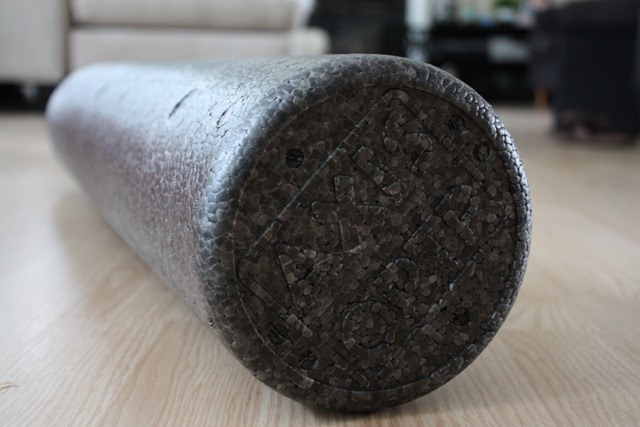
Since I hurt my knee running 3 months ago, my foam roller and I have become attached at the hip- almost literally. The minute the words “IT band” were even whispered, shouts of “foam roll, foam roll, foam roll!” could be heard from all directions.

And those shouts were right: foam rolling makes a huge difference in injury recovery, and even more importantly- injury prevention.

My foam roller is almost as well traveled as I am- it’s accompanied me on many adventures this summer, from MD to VA and all over NC.
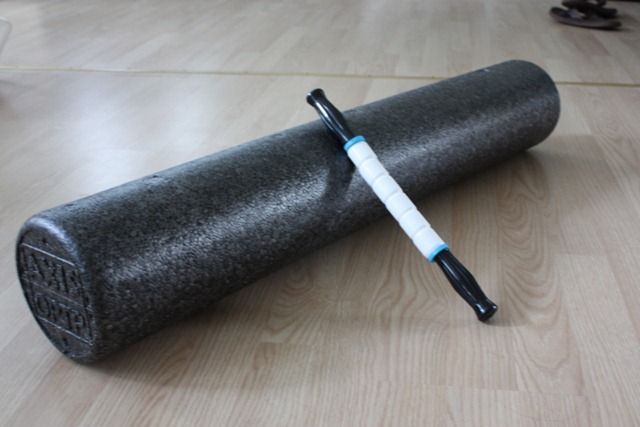
But lugging a 3 foot plus foam tube around with you isn’t without its difficulties- and strange glances. And though it probably deserves to, the foam roller isn’t exactly the best use of the 2 carry-on bag restriction on planes these days.
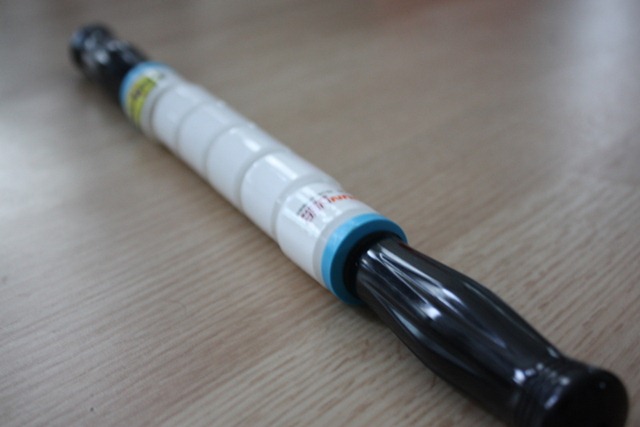
Enter The Stick.

The foam roller’s baby cousin.
Both the foam roller and the stick are meant to serve the same purpose: self massage.
More precisely, myofascial release. The poor girl’s daily sports massage.
Stretching is great, but it doesn’t get rid of knots in the muscle (known as trigger points).
The foam roller & the stick can. But when to use which one?

Let the showdown begin:
| The Foam Roller |
The Stick |
| Uses body weight for pressure |
Uses hands to push stick into muscle |
| Good for holding over trigger points |
Good for rolling across muscle |
| Comes in different firmnesses |
Comes in different lengths |
| Good for use at home or gym |
Good for travel or portable use |
In the end it comes down to personal preference, but each has it’s own benefits.
For me, the stick travels with me; the foamroller stays home. I prefer the foam roller for specific trigger spots, and the stick for general muscle massage. The foam roller works better for hips, and the stick works better for the neck & back.
Sometimes it’s awkward to hold yourself up to use the foamroller, so the stick can come in handy for those times- I think it’s less awkward (and feels better) to use the stick for calves than the foam roller, but I think the foam roller feels better on quads.
(Plus, your friends will thank you when you travel bearing massages in the form of the stick:)

So until they start packaging up sports massage therapists and selling them for under $25, the stick & foam roller it’ll be.
Are you a foam rolling fan or a stick/tiger tail fan?


Running
I had my one little pity post, and now it’s time to move on to bigger & better things. Ok, maybe not bigger & better- but small & positive.
It’s been 2 & 1/2 months since I’ve been able to really work out- I keep wondering to myself, where in the world will I be when I can start again? It’s time to something to set myself up for the best return to running as possible.
Cross-training is always a great option to keep up cardiovascular endurance when you can’t run, but running is all about the cardiovascular system.
Some other areas you can work on to improve your running:
Flexibility
Not only does being flexible keep your hamstrings from screaming after a run, it helps your body recover faster by improve blood flow. Increasing your range of motion makes you a more efficient runner, and lets you focus on other things like getting up that hill! Runners are notorious for having extremely tight hamstrings- especially men.

Strength
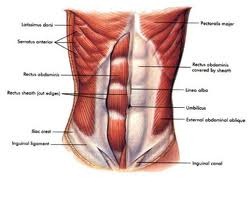
A strong core helps keep your body aligned properly which helps prevent injury and allows you to have maximum power through your stride.

Strengthening your lower body may seem redundant, but running tends to use your biggest muscles, and lets the little ones get away with slacking off. Focusing on lower body strength exercises like lunges & squats can help you really focus in an those ever-important leg muscles.
You may not use your arms to run, but having upper body strength helps you run with good form. Plus, if your arms don’t get tired, that extra energy can go into your running, not holding your arms up.
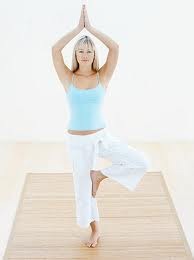
Balance
Improving your balance can help you run smoother, and therefore moving forward with less energy. Balance is important since you’re constantly switching from one leg to another, but it’s also important in dealing with uneven terrain or obstacles you may come across.

Whether you’re running or not running now, focusing on these 3 areas can help improve your running efficiency, improve recovery, and prevent injury.
Looks like I’ll be doing some stretching, strength training, and balancing acts this week. 😉