Beverage
The following post about tart cherry juice is sponsored by FitFluential, Inc. on behalf of The Cherry Marketing Institute.
When you’re training for an athletic event, be it a marathon, triathlon, or adventure race, or whether you’re just an exercise enthusiast, there’s one aspect of training that seems to slip by the wayside: recovery.

It’s kind of how like sleep is the forgotten element of health: diet, exercise, sleep!
How you recover between exercise sessions is as much a part of your training program or exercise regimen as the actual miles logged and the drills performed. Two ways to maximize your recovery are a) rest and b) nutrition.
By nutrition, I mean what you eat or drink before, during, or after training. It may seem a little dull compared to the excitement of building training plans {oh, just me?} but it’s just as important. If you expect to see improvements in your time, your strength, or even simply decrease your fatigue or injury risk, you should consider your recovery strategy.
Most of the time we turn to protein for recovery after a workout. The amino acids that form protein help rebuild and repair the microscopic tears that occur in muscle tissue during training. {It should be noted that carbohydrate after a workout is also important as it helps replenish lost glycogen stores.}

But you really probably already know a bit about protein. Instead, let’s talk tart cherry juice. {I know, what a segue.} Some people view juice as an empty source of calories or sugar, but when it comes to muscle recovery, tart cherry juice could actually be a beneficial tool. Tart cherries may help decrease inflammation, muscle damage, and oxidative stress. From elite athlete to weekend warrior, tart cherry juice can help decrease muscle pain associated with intense exercise. Interestingly enough, tart cherries may also help improve sleep. Better sleep = better recovery.
Tart cherries work in a different capacity than a carb + protein combo post-workout (tart cherries contain a compound called anthocyanin, which has been linked to reducing inflammation)In fact, drinking/eating them before intense exercise can aid in recovery after exercise. That means a pre-workout shake or drink can be beneficial, as can post-workout.
It’s important to note that the research that indicates tart cherry juice aids in recovery is done on tart cherries, not sweet cherries. {Specifically Montmorency cherries.} One of these studies looked at cyclists who drank tart cherry juice twice a day for seven days. They showed less inflammation after a race-scenario than those who didn’t drink the tart cherry juice. I’m going to embark on The Cherry Marketing Institute’s 7-Day Tart Cherry Juice Challenge to see if I notice a difference myself. Granted I’m nowhere near an elite athlete, but I exercise hard enough to be sore afterwards. Case in point: I can’t lift my arms above my head today.
Here’s a great way to add tart cherry juice to your pre/mid workout routine: add it to a homemade sports drink, like this one:


by with a Side of Sneakers
- 4 cups liquid {water, coconut water, or even herbal/fruity tea – a combo of water and coconut water is my favorite}
- 1/2 cup tart cherry juice
- 1/4 cup lime juice
- 1/4 teaspoon sea salt
- 1/4 tsp freshly grated ginger root
- 1 T honey or agave {adjust to taste}
Mix all ingredients together and store in fridge. Drink before, during, or after workouts, or just as a hydrator throughout the day. Tart cherries have been shown to have the most benefit when used twice a day.
Powered by
I’ll be checking back in on my 7-day challenge soon – who wants in with me?!
To learn more about tart cherries and how they can aid your recovery {or for recipe ideas} visit ChooseCherries.com or:
Sports Nutrition
Coconut water, that is.
Coconut water is all the rage these days. It’s the new hot energy drink. Only it’s not new- and it’s not full of crazy ingredients.

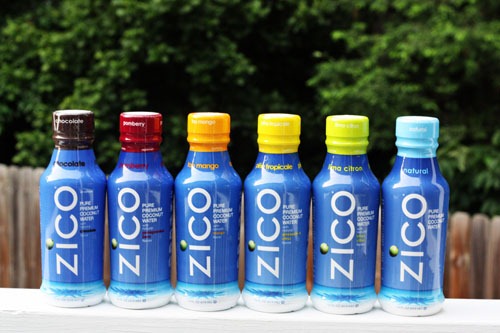
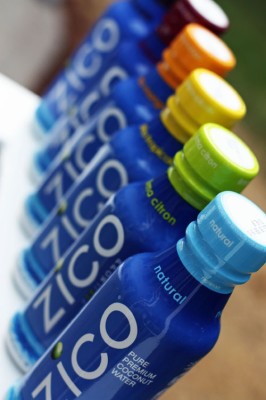
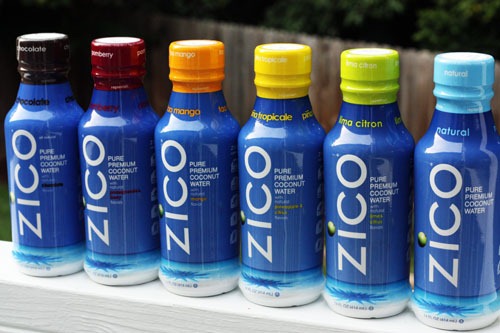
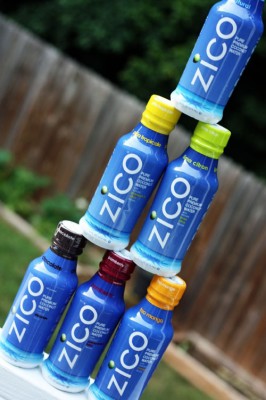
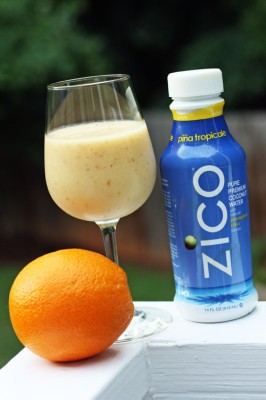
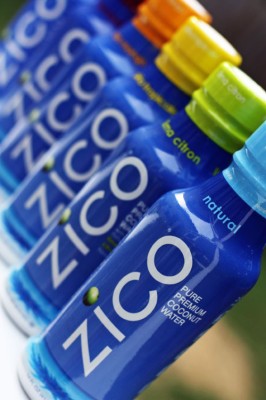
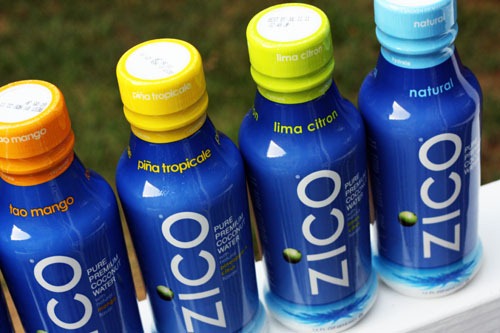
Last week ZICO was kind enough to send me a case of coconut water to review, and boy was I ever happy to do so.
Coconut water is nature’s natural energy drink. It’s the liquid from the center of young, green coconuts. {Coconut milk is a mixture of coconut water and the white coconut meat.} It’s chock full of potassium and other electrolytes- the key component of energy-boosting drinks. Plus, there’s no fat, cholesterol, or added sugar.

Each 14 oz bottle is only 60 calories, so while that may not be enough to refuel you for a tough workout, it’s a great way to rehydrate without adding too many calories.
I was surprised by the array of flavors- I’d only seen the Natural and Pomegranate flavors in the store, but this pack also include Lima Citron, Tau Mango, Pina Tropicale, and Chocolate.

My absolute favorite is the Pina Tropicale. The chocolate {and this coming from a non-chocoholic} is surprising delicious and rich. Not at all like what I would imagine chocolate-flavored water would taste like- more like chocolate milk. Especially since coconut water’s just a little bit thicker than regular water.
The ZICO coconut water is definitely best super ice cold- as it warms up, it tends to taste a little salty. It’s absolute the most refreshing thing to drink after a particularly sweaty workout- say, bikram yoga, or a bike ride in 98 degree weather.

It’s also insanely delicious used as the base of an icy fruit smoothie!

It doesn’t hurt that ZICO is a pretty cool company- founded by an athlete and Peace Corps volunteer, Mark Rampolla.The bottles are made from 30% recycled material, and the company’s committed to staying sustainable and responsible.

Guess what?
ZICO’s giving you a chance to win your own case of ZICO coconut water. {Must be a US resident.}
How to Enter:
1. Answer the following question in the comment section:
How are you Naturally Powered?
For additional entries:
2. Take the Pledge to be Naturally Powered on ZICO’s Facebook page . ZICO will make a donation to the Challenged Athlete’s Foundation!
3. “Like” with a Side of Sneakers on Facebook. {You may find additional ways to enter over the course of the giveaway…wink wink.}
4. Tweet: “@SideofSneakers is getting Naturally Powered and giving away a whole case of @ZICO coconut water http://ow.ly/5oC7Z ”
Please leave a comment below for each method of entry. Winner will be chosen at random. You have until Monday at midnight EST to enter!!

Don’t forget to visit ZICO’s website for more information on fueling naturally with coconut water, or follow ZICO on Twitter or Facebook.
P.S. If you live in LA, NYC, or Miami follow your ZICO city on Twitter to find out how to get FREE ZICO! {@ZICOny, @ZICOla, @ZICOmia}
Sports Nutrition
You know you’re supposed to hydrate when you exercise. You know you’re supposed to drink more when it’s hot out. But do you really know how to hydrate?

I grossly underestimated the power of the summer heat earlier this year at the North Face Challenge. I sipped on my water bottle all morning, but I failed to account for one big thing: the race didn’t start until mid-afternoon- when it’s really hot.
Unfortunately I realized my mistake only after I was 3 miles into the middle of the woods- dizzy, confused, and nauseas. I won’t go into explicit detail (but if you really want to know I did get a bit graphic in my race recap.) It wasn’t pretty.
With a 24 hour bike race around the corner in the peak of August heat, it’s time for me to make sure I don’t repeat that same mistake.
So now, the 6 simple rules of hydration I always knew but never quite followed until now:
How to Hydrate in the Heat
1. Start early. Don’t wait until the morning of the race to start drinking. You can only absorb so much so fast- you don’t want all that hydration going straight to the toilet. Worst case- start the day before. Your best bet- begin hydrating a few days before your event.
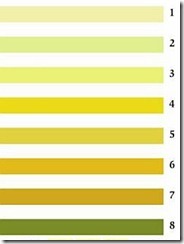
2. Replace sweat loss. To stay hydrated, you need to replace any fluid you lose. If you sweat a lot, you better bet you need to be drinking a lot! A good rule of thumb: weigh yourself before & after a workout. The amount of weight you lost is the amount you need to drink. (For every pound lost, drink 16 oz of fluid.) Don’t want to weigh yourself? Check your urine– it should be pale yellow, not dark & concentrated.

<— “3” is the magic hydration number.
If your pee is darker, drink up!
(Chart developed by L. Armstrong, PhD)
3. Don’t rely on thirst. Our bodies are usually pretty good at telling us what we need, but unfortunately they’re a little slow on the uptake when it comes to thirst. You only feel thirsty after you’ve started to become dehydrated. Plus, your thirst is quenched before you’ve gotten all the fluid you need. So drink even if you’re not thirsty!
4. Drink at regular intervals. Water can turn to sweat in as little as 10 minutes. Drinking regularly throughout your workout or event is the best way to stay hydrated. Having small amounts of fluid frequently also helps to prevent that unpleasant sloshing feeling in your stomach.
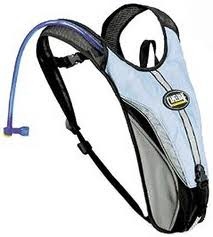
5. Make it good & easy. The easier water or other fluid is to access, the more likely you are to drink it. Figure out what works for you- carrying a water bottle, using a Camel Bak, etc. Making it taste good helps you drink more too; so does having the fluid cold.


6. Choose fluids wisely. Water is fine for short events, but if you’re exercising for more than an hour, you probably want to try a sports drink or other fluid with electrolytes. What to look for: a drink that’s 6-8% carbohydrate & has at least sodium & potassium in it. [Most beverages marketed as ‘”sports drinks” meet these requirement; this isn’t the time to choose the low sugar option!]
Read this post to learn more about hydration.
As an added bonus, leave your best tip for staying hydrated & be entered to win a BPA-free insulated stainless steel water bottle from Thermos! They’re celebrating the launch of their Cold Matters series and one of you lucky SoS readers gets to win!

For extra entries, share the hydration love and tweet this post! (You know you like free stuff ;))
“Learn 6 Keys to Hydration from @sideofsneakers & get a chance to win a prize from #ThermosCold series! http://ow.ly/2vsUq “
or
Subscribe to SoS!
Let me know how you’ve entered with separate comments on the hydration post!!!! Ends Sunday 8/29!!
Have you ever gotten dehydrated during a race? What about in training?
Breakfast, DYKT
Banana Apple Oats!!

Just my usual oat combo with banana, vanilla, and apple. To speed up cooking time, I cut up the apple & added some cinnamon and agave, then nuked it in the microwave for a minute before adding to the oats.
Guess what’s baaaaaaaaack?! DYKT!!!
Here’s some old “Did you knows” for new readers:
Thin doesn’t mean fit- the skinny fat phenomenon
Myths of carbo loading
Calories are not created equal
Weight of muscle v fat
Overweight kids & diets
Weight loss isn’t willpower
Exercise doesn’t equal weight loss
Obesity in the NFL
Did You Know Tuesday #9
Did you know that coffee isn’t necessarily dehydrating?
If your body is used to coffee (i.e. you drink it on a regular basis) you can actually count is as part of your fluid intake! However, if you only have it on occasion, coffee acts as a diuretic and can contribute to dehydration.
Coffee is one of those topics where “they” change their minds about it nearly every day, so use your best judgment!! Check to see if you’re hydrated– is your urine clear or pale yellow, or is it dark? Does your skin look dry? Are you thirsty?!
If you drink coffee before a race, make sure you practice drinking it before a training run to see how your body handles it. And be sure to include other fluids besides coffee.
Do you drink coffee before a race? I do, but stick to one cup. (Gotta make sure the plumbing’s clear if you know what I mean…;))
SNS
I promised you a Sports Nutrition Series, so here you go…. the first installment!!
Hydration is extremely important in an athlete’s ability to train, compete, and recover. Even slight dehydration (1-2% body weight loss) can have a negative impact on performance.
“No other nutritional intervention comes close to providing the performance-enhancing effects of staying well-hydrated.”Bob Murray, PhD FACSM
Why is dehydration bad? It causes impaired heat dissipation, which causes a rise in body temperature and increased strain on the cardiovascular system. Your heart beats faster, you use up glycogen faster, your brain function becomes impaired, and exercise just plain feels harder. It can also cause overall fatigue and lethargy.
Standard fluid recommendations have traditionally stated ‘drinking to thirst’ is adequate to prevent dehydration. However, this is largely based on sedentary adults, not endurance athletes or heavy exercisers, who typically need more fluid. The American College of Sports Medicine covers their bases by saying learn your personal needs, which can be done by weighing yourself pre and post exercise.
It’s tough to state an actual number or amount of fluid that is recommended since it varies person to person. Essentially, the volume of fluid consumed should be based on sweat lost. Some people sweat a TON and some not at all. The amount of fluid these two types of people need would be different. Fluid should be replaced at a rate close to or equal to sweat loss. Learning how much you sweat can help prevent dehydration. For example, you weigh yourself right before exercise and right after, and notice a 2lb weight loss- this means you should drink an additional 32 ounces of water during your next training so you don’t become dehydrated. [1 pound (16oz) of body weight lost = 1 pint (16 fl oz) of sweat lost] If you weight 150+ lbs try not to lose more than 3lbs. Do this by drinking regularly throughout exercise. Water can be turned into sweat in 10 minutes!
Thirst alone is not the best indicator of dehydration. You get thirsty when your body senses a decrease in body water, or an increase in sodium concentration, meaning you’re only thirsty once you’ve experience a fair amount of loss. Basically that means the sensation of thirst doesn’t match the body’s need for fluid all that well, especially for exercising athletes. Also, fluid quenches thirst before body levels have been fully replaced.
Excessive fluid consumption can also causes a problem by diluting the body’s sodium (called hyponatremia). It’s much rarer than dehydration, but it’s important to be aware of, especially in endurance events.
Things that cause decreased fluid intake:
– Uncomfortable sensation of fluid in the stomach
– Poor access to fluid during exercise
– Lack of education
Ways to increase fluid intake:
– Easy access (nearby, easy container to drink out of)
– Train gut to tolerate more fluid
– Consume fluid at regular intervals
– Make it taste good- improving flavor can increase consumption
– Cool it down – temperature of a beverage has negligible effect on body temperature, but most people will drink more of a cooler beverage
What should I do during training?
– Learn your sweat rate
– Practice drinking!
What should I do during an event?
– Put what you’ve learned in training to use
– Drink on a schedule to avoid dehydration or distraction from drinking
How do I know if I’m drinking enough?
Honestly, the answer’s in the toilet. Check the color of your urine.
– It should be fairly clear and of good quantity
– You should urinate every 2-4 hours
– Your morning urine shouldn’t be dark or concentrated
Urine color chart:

If your urine is darker than number 3, drink more!(Chart developed by L. Armstrong, PhD)
Plain water is adequate during exercise that lasts less than hour. Sports drinks may be a good option in exercise lasting longer than 60-90 minutes. I’ll address sports drinks next time!!
Want something more specific than ‘learn your needs’? Here’s an estimation:
–Start off hydrated: Drink 2-3ml per pound body weight 4 hours before exercise. (That’s about 10-15 ounces for someone weighing 150 pounds.) Don’t try to overhydrate- you can only absorb so much at one time and you’ll just pee it out.
–Drink regularly during exercise. Have an idea how much fluid you usually lose. Take a couple gulps every 15 minutes.
–Replace lost fluid: After exercise, drink 50% more fluid than you lost in sweat. Sipping slowly allows better absorption.
So there ya have it. Obviously there’s a lot more to say about that, but there’s an overview for you. How do you stay hydrated?!