Running Rehab
I was pleasantly surprised when I hit the pavement a few weeks after my son was born. My knee didn’t hurt and things didn’t feel that different. I took things painfully slow- alternating walking and running, being uber diligent not to overdo things.

While things were ok at first, it quickly became clear that I wasn’t going to be able to give myself the consistency I needed in order to train properly. As we reached the peak of the no-sleep debacle, I just didn’t have it in me to get out there and run on a consistent basis- slowly cutting down the walking intervals and gradually building mileage. I definitely didn’t have the time the dedication to commit to my rehab exercises in the manner I needed to in order to see progress. You don’t build muscle or gain strength by haphazardly doing a few PT exercises every few days. So after awhile I sort of subconsciously through in the towel.
Once the baby started sleeping {halleluiah} I started to get some of my energy back. Before long I was itching to get back out there, but the lack of sleep and breastfeeding had taken it’s toll on me. Even with a good warm-up, five steps into a run I was limping in pain. While I was angry and frustrated to still be dealing with this old nagging injury, I knew what the problem was this time- I had {and have} zero muscle.
Forget muscle imbalances – a leading cause of injury – I had a serious case of muscle wasting. Lack of sleep destroys you, both mentally and physically. Add to that the physical burden of breastfeeding and I was a lost cause. I love nursing my son and I think it’s the best choice for him, but it requires a TON of calories. Even when I stuff my face, I can barely keep up with the demand. There are no extra calories left for me to build muscle, gain weight, or fuel a run.

Even though I’d love to just lace up my neon shoes and dart out for a run, it’s a back-to-basics approach for me. Instead of waiting for injury to knock me on my butt, I started where I left off last time around- with my beloved chiropractor. He’s a sports-focused chiropractor specializing in Active Release Technique. He’s an athlete himself and I knew from my past experience with him that he could help get me off on the right foot {pun intended}.
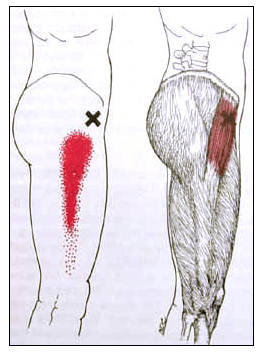
Turns out it may not really be my IT band that’s the culprit. Over the course of the month he gave me a whole boatload of new exercises to target my weaknesses, kneaded out some of the kinks in my leg, and helped me work on my running form and cadence {again}.
Now it’s up to me to be a good patient and find the dedication to truly focus on the rehab and rebuilding my strength. Committing to the rebuilding phase is what will get my back on my feet, running like I long to be. I can’t wait for the physical and mental relief a nice long run brings.