Health Info
Last week we talked about ways to “make it work”- specifically how to keep up with healthy eating even in the midst of a chaotic and busy life. Now it’s time to talk about the other half of the equation: exercise.
Here are a couple different strategies to try:
First Things First
Exercise in the morning before you start your day. Some people aren’t morning exercisers, but if it’s already done, other things can’t get in the way.
Do Something Small
I try to start most mornings with a walk around the neighborhood. It’s not far- maybe a mile- and doesn’t take much time. I know as soon as I sit down to check my email, it could be hours before I get up again. This way, if my workout gets pushed off, at least I’ve done something to get the blood flowing.
Squeeze It In
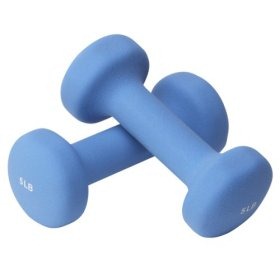
There’s no difference between 30 minutes of exercise and 10 minutes of exercise 3 times a day. 10 minutes before breakfast, 10 minutes at lunch time, and 10 minutes before dinner give you your fill. Grab a set of handweights and pump out a few sets, do some jumping jacks or push ups, or go for a walk. Just be sure to warm up adequately so you don’t get hurt.

Write It Down
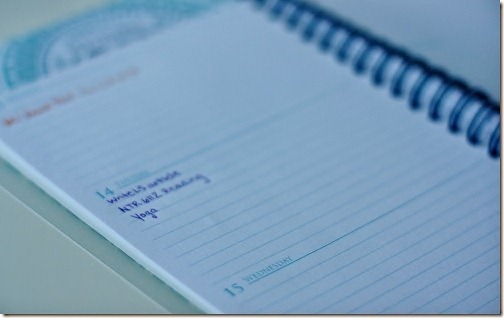
If you check your calendar as many times a day as I do, you’re probably going to see if you have a some gym time planned. Seeing it and planning for it help you make it happen.

Make a Plan
I do beset when I’m training for something because the consequences for skipping too many workouts are more tangible. You don’t have to be actually training for something to take this approach- set a goal, pick a date, and come up with a plan. I’ve used the same approach for strength training as I do for a race- if I didn’t lift 3 times a week, I knew I’d never increase my strength or up my weights.
Form a Routine
The more consistent you can be, the easier it is to stick with it. Many people operate on a routine- there’s a specific time they get up in the morning, come home from work, eat dinner, etc. Add exercise to that routine to help you keep it up even when things get busy.
Take a Class/Recruit a Buddy
Knowing spin class is every Wednesday at 7 can help you get there even when you’re tempted not to. It helps you plan around your workout time, and seeing other people in class can help motivate you to go. Having a workout buddy- someone you meet for a walk, you go to a class with, or you meet at the gym- helps keep you accountable too. You may ditch your own workout for a wimpy excuse, but you probably wouldn’t ditch your friend unless it was important.

Pay for a Class/Membership
Prepay for a month of yoga classes or boot camp, etc. If you’ve already paid upfront, the chances of you making it to that class are pretty good. 
How do you stay on track?
{Pssst…Have you checked out my 24 week pregnancy update yet?}
Health Info
I have a little bit of what you might call a busy schedule. I’m guessing most of you do too.
While I work from home, I’m still “at work” during the day. The rest of my life happens in the evenings, and I have very few of them.

Most of my evenings consist of various meetings. I’m on the Board this year for Junior League, which I love. My position essential means a lot of meetings. I also somehow ended up president of the district dietetic association, which I’m not quite as thrilled about yet. That adds another handful of meetings. Add in a few social happenings, and there goes the rest of my evenings and weekends.
One of the most frequent excuses I hear from clients is that they don’t have time to be healthy. The word excuse is a harsh one to use, because it’s completely valid. But it’s also not good enough- you just have to find a way to make it work. I’m almost never home during dinner time, yet I still eat a majority of home cooked meals and still fit in physical activity.
Here’s some ways to make it work for you:
Form a Routine
It’s easy to get things done if you have a schedule or routine. Pick a day for grocery shopping and always do it that day. Set a time for exercise and always do it then. Decide when you’ll prep your meals and stick with it. If it writing down or putting it on a calendar helps, do it.

Pre-Prep Meals
The first time you pull out a knife to prepare a meal, keep it out and prep as much as you can at once. This may mean peeling and chopping vegetables, pre-cooking grains like rice or quinoa, measuring baking ingredients and bagging them up, or chopping nuts. Group things together by meal so they’re reading to go when it’s time to cook.

Cook Ahead
Everyone loves leftovers, right? Why not make all your meals leftovers? Instead of just prepping a bunch of meals at once, sometimes I like to fully cook them. All I have to do is reach in the fridge or freezer to serve a meal. Having prepared meals helps me make healthy choices even when I come home late, tired, or starving. Just as easy as fast food; way healthier. This is also makes it easy for the husband to have a home-cooked dinner, even when I’m not home at dinner time.

Think Outside the Box
Most people tend to have simple lunches and more complex dinners. Think “lunch” for dinner- it doesn’t have to be fancy or elaborate to be satisfying. Lunch meals tend to be easier to transport, making grab and go dinners easier. Don’t hesitate to have lunch for breakfast or breakfast for dinner it it makes it easier.
Have Set Go-To’s
Having an arsenal of go-to meals is probably what keeps me fed most of the time. There’s a lot to be said for not having to come up with an idea for a meal. I just make sure I always have the ingredients for those meals on hand. This works for meals to cook at home as well as on-the-run foods.

Use Your Freezer
Often fresh is best, but when it comes to frozen veggies, as long as they’re not in sauce, they’re just as good, if not better, than fresh. It’s easier to eat veggies when they don’t take any prep work!
Snack
If you’re not getting home until late, pack a snack. Waiting too long to eat simply spells disaster.

Stay tuned for Part II: Fitting in Exercise.
What strategies do you use to fit health into your busy life?